Colchicine 0.5mg / 0.6mg (Colcrys Generic)
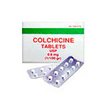
Clinical guidance, bioequivalence criteria, and verified partner dispensing standards for Colchicine 0.5mg / 0.6mg (Colcrys Generic). Reviewed by board-certified internal medicine and clinical pharmacotherapy specialists.
📖 Peer-Reviewed Clinical Monograph1. Pharmacological Profile & Executive Summary
Targeted anti-mitotic alkaloid that arrests neutrophil microtubule assembly and selectively suppresses the NLRP3 inflammasome, terminating acute gout flares and reducing cardiovascular inflammation.
Rheumatology & Internal Therapeutics • Colchicine 0.5mg / 0.6mg (Colcrys Generic)
2. Human Pharmacokinetic Matrix
| Pharmacokinetic Parameter | Clinical Metric | Therapeutic Significance |
|---|---|---|
| Peak Plasma Time (Tmax) | 1.0 hour | Determines latency from ingestion to peak pharmacological onset. |
| Elimination Half-Life (T½) | 27 to 31 hours (deep intracellular leukocyte sequestration) | Governs duration of action and steady-state dosing intervals. |
| Peak Concentration (Cmax) | 2.5 to 3.0 ng/mL | Maximum observed systemic concentration in human plasma. |
| Bioavailability & Food Interaction | 45% | Defines oral bioavailability and dietary lipid dependency. |
| Plasma Protein Binding | 39% | Governs free circulating drug fraction available for receptor binding. |
| Volume of Distribution (Vd) | 500 to 800 Liters | Reflects tissue and lipid compartment penetration. |
| Hepatic Metabolism | Hepatic CYP3A4 and P-glycoprotein substrate | Primary enzymatic clearance and CYP pathways. |
| Elimination / Excretion | 40%–65% unchanged in urine; remainder fecal/biliary | Renal vs biliary/fecal excretion balance. |
3. Evidence-Based Clinical Dosing Protocols
Daily / Baseline Regimen
Gout Prophylaxis: 0.5mg to 0.6mg once or twice daily. Cardiovascular Secondary Prevention: 0.5mg once daily.
On-Demand / Titration Regimen
Acute Gout Flare: 1.2mg at first symptom, followed by 0.6mg 1 hour later (1.8mg total). Do not repeat within 3 days.
Severe renal impairment (CrCl <30): reduce dose by 50% and do not repeat acute flare courses more than once every 2 weeks.
4. Pharmacokinetic Drug-Drug Interaction Matrix
| Interacting Agent / Class | Severity Tier | Clinical Mechanism & Management Strategy |
|---|---|---|
| Strong CYP3A4 / P-gp Inhibitors (Clarithromycin, Ketoconazole) | Contraindicated in Renal Impairment | Causes fatal colchicine toxicity; mandatory dose reduction by 75% in normal renal function. |
5. Adverse Reaction Profile & Clinical Incidence Rates
| Adverse Reaction | Incidence Rate | Physiological Mechanism & Mitigation Strategy |
|---|---|---|
| Diarrhea / Abdominal Cramps | 23% | Enterocyte microtubule inhibition; dose-limiting. |
| Nausea | 7% | Gastric transit effect. |
6. Patient Administration & Safe Usage Guidelines
Take at the very first twinge of joint pain for maximum efficacy. Discontinue if severe watery diarrhea develops.
7. Frequently Asked Clinical Questions
Why is the modern low-dose Colchicine regimen preferred?
The AGREE clinical trial proved that 1.8mg total over 1 hour provides identical pain relief to the historical toxic 4.8mg regimen with an 84% reduction in diarrhea.
How does Colchicine prevent secondary heart attacks?
In the COLCOT and LoDoCo2 trials, low-dose colchicine (0.5mg daily) inhibited vascular NLRP3 inflammasomes, reducing secondary stroke and myocardial infarction by 23–31%.
Clinical Practice & Formulary Guidelines for Colchicine 0.5mg / 0.6mg (Colcrys Generic)
Westover Hills Clinic provides evidence-based pharmacological reviews, bioequivalence assessments, and clinical monitoring recommendations for chronic disease management.
Peer-Reviewed Scientific Citations & FDA References
- Terkeltaub RA, et al. Dosing of oral colchicine for early acute gout (AGREE). Arthritis Rheum. 2010;62(4):1060-1068.